Summary
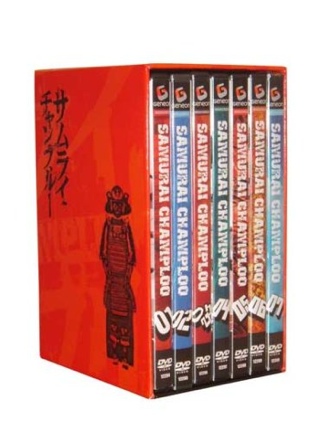
Shinichiro Watanabe's "film noir"-ish sci-fi adventure "Cowboy Bebop" set a new standard for cool in anime in 1998, and "Samurai Champloo", an edgy mix of Edo-era martial arts and hip-hop irreverence, is a worthy follow-up. A string of coincidences brings together three misfits in a two-bit tea house: Mugen, a rebellious vagabond; Jin, a taciturn ronin; and Fuu, a nutty waitress. The sardonic Mugen lacks the polish that distinguishes a classic martial artist--he uses break dance spins and flips against his foes. Jin moves with a polish that approaches iciness: When he unsheathes his sword, he becomes a lethal work of art in motion. Fuu forces Jin and Mugen to help her find a mysterious samurai "who smells of sun flowers." As the ill-assorted trio wanders towards Nagasaki, Watanabe treats the audiences to a string of outrageous, anachronistic adventures. In Episode 18, Mugen belatedly learns to read at a smackdown elementary school, while Jin tries to settle the rivalry between the heirs to the dojo of his former sensei. The seemingly unrelated storylines collide in a no-holds-barred graffiti contest featuring Tokugawa rap lyrics, ink-brush tagging, Hiroshima homeboys, and a caricature of Andy Warhol. But Watanabe reveals the hidden significance of these nutty interludes when he brings his picaresque adventure-comedy to a close. Like "Cowboy Bebop", "Samurai Champloo" leaves the viewer wanting more. (Rated 16 and older: violence, violence against women, profanity, brief nudity, sexual situations, alcohol and tobacco use) "--Charles Solomon"